Can Varicose Veins Cause Leg Ulcers? Understanding the Hidden Connection
Explained by Venus 11 Varicose Vein Hospital, Mumbai, India | Dr. Himanshu Shah – 23+ Years of Experience
Varicose veins are often considered a cosmetic concern, but did you know they can sometimes lead to serious complications, including leg ulcers? What begins as swollen, twisted veins or mild discomfort in the legs can gradually develop into a persistent wound that refuses to heal.
Many people ignore the early symptoms of varicose veins, such as leg heaviness, swelling, itching, and skin discolouration. However, these signs may indicate an underlying circulation problem that requires medical attention.
At Venus 11 Varicose Vein Hospital in Mumbai, India, Dr. Himanshu Shah, with over 23 years of experience in treating vein-related conditions, emphasises the importance of early diagnosis and appropriate treatment to help prevent complications such as venous leg ulcers.
What Are Varicose Veins and How Do They Affect Blood Circulation?
Varicose veins are enlarged, swollen, and twisted veins that commonly develop in the legs. They occur when tiny valves inside the veins become weak or damaged, allowing blood to flow backwards and accumulate instead of returning efficiently towards the heart.
This condition, known as chronic venous insufficiency, increases pressure inside the leg veins. Over time, persistent venous pressure can affect surrounding tissues, causing swelling, skin irritation, pigmentation, and, in advanced cases, open wounds.
Although not everyone with varicose veins develops leg ulcers, individuals with longstanding venous insufficiency may face a higher risk.
How Can Varicose Veins Lead to Leg Ulcers?
The connection between varicose veins and leg ulcers lies in prolonged venous hypertension, or increased pressure within the veins.
When blood circulation becomes inefficient, fluid can accumulate in the lower legs. This persistent pressure causes inflammation and gradually damages the skin and surrounding tissues.
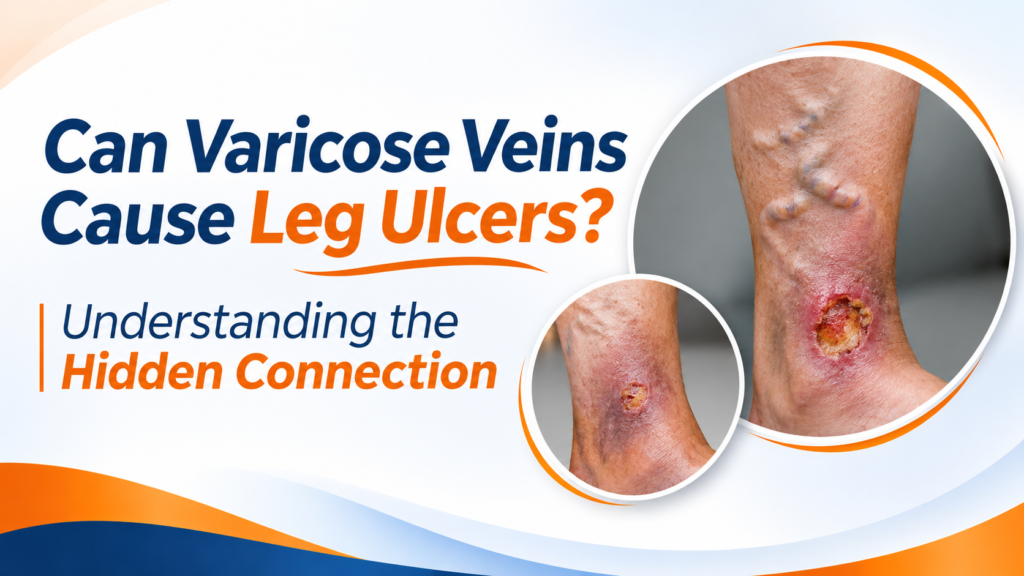
The skin may become thin, fragile, itchy, or darkened. Eventually, even a minor injury can develop into an open wound that struggles to heal.
These wounds are called venous leg ulcers and typically appear around the ankle, particularly on the inner side of the lower leg.
Unlike ordinary cuts, venous ulcers often require specialised wound care and treatment of the underlying circulation problem.
Early Warning Signs You Should Never Ignore
Recognising the symptoms of venous insufficiency can help patients seek medical attention before complications develop.
Common warning signs include:
- Persistent swelling around the ankles and lower legs
- Visible, enlarged, or twisted veins
- Heaviness, aching, or discomfort after prolonged standing
- Darkening or brownish discolouration of the skin
- Dry, itchy, or hardened skin around the ankles
- Slow-healing wounds or open sores near the ankle
If you notice a wound that has not healed within two weeks, consult a vascular specialist for evaluation. Increasing redness, severe pain, fever, or spreading infection requires prompt medical attention.
Who Is at Greater Risk of Developing Venous Leg Ulcers?
Several factors can increase the likelihood of developing venous ulcers, particularly when underlying vein disease is present.
These include advancing age, obesity, a family history of venous disease, previous deep vein thrombosis (DVT), reduced mobility, and occupations involving prolonged standing or sitting.
People who already experience chronic leg swelling, skin pigmentation, or recurring varicose vein symptoms should be especially attentive to changes in their skin.
Early evaluation can help identify circulation problems before they progress into more serious complications.
How Are Venous Leg Ulcers Diagnosed?
Accurate diagnosis is essential because not every leg wound is caused by varicose veins. Diabetes, arterial circulation problems, infections, and other medical conditions can also contribute to non-healing wounds.
At Venus 11 Varicose Vein Hospital, patients undergo a detailed clinical assessment to understand the underlying cause of their symptoms.
A Doppler ultrasound examination helps evaluate blood flow, detect damaged vein valves, and identify venous reflux. Doctors may also assess arterial circulation before recommending compression treatment.
This evaluation allows specialists to develop an appropriate treatment plan based on the patient’s condition.
Modern Treatment Options for Venous Leg Ulcers
Effective venous leg ulcer treatment focuses on healing the existing wound while addressing the underlying circulation problem.
1. Wound Care Management
Proper wound cleaning, suitable dressings, and regular monitoring support healing and help manage complications.
2. Compression Therapy
Medically prescribed compression bandages or stockings help reduce swelling and improve venous blood flow. Compression is a key treatment for venous ulcers when arterial circulation is adequate.
3. Endovenous Laser Treatment (EVLT)
When significant venous reflux is identified, minimally invasive procedures such as Endovenous Laser Treatment (EVLT) may be recommended. EVLT closes problematic superficial veins, helping reduce abnormal venous pressure and supporting ulcer healing.
4. Lifestyle and Preventive Care
Regular walking, appropriate leg elevation, weight management, and avoiding prolonged immobility may support circulation and help reduce recurrence.
Treatment selection depends on the severity of the ulcer, vascular assessment, and individual medical needs.
Why Choose Venus 11 Varicose Vein Hospital in Mumbai?
At Venus 11 Varicose Vein Hospital, Borivali West, Mumbai, patients receive specialised evaluation and treatment for varicose veins, chronic venous insufficiency, and associated leg ulcers.
Led by Dr. Himanshu Shah, with more than 23 years of experience, the hospital offers Doppler ultrasound assessment, advanced varicose vein treatments, and personalised care focused on identifying the underlying cause of venous problems.
The goal is not simply to manage the visible wound but also to address contributing vein conditions and help reduce the likelihood of future complications.
Conclusion: Don’t Ignore the Warning Signs
Varicose veins are not always just a cosmetic issue. When associated with chronic venous insufficiency, they can contribute to skin damage and painful, non-healing leg ulcers.
Early diagnosis, appropriate wound care, compression therapy, and treatment of underlying venous reflux can make an important difference in healing and long-term leg health.
If you are experiencing persistent leg swelling, skin discolouration, or a wound that refuses to heal, seek professional evaluation.
Consult Dr. Himanshu Shah at Venus 11 Varicose Vein Hospital, Mumbai, for specialised assessment and personalised treatment options.
Website: www.veinclinics.in